In Christopher Emdin’s (2014) TEDTalk called “Teach teachers how to create magic,” Emdin’s call to action is for teacher education programs to require teachers to go into communities to familiarize themselves with the learners they want to engage. He says pre-service teachers should go visit the barbershops and churches and even asks teachers to take notes on teaching engagement strategies from rap concerts. Emdin’s point is that teachers who plan to teach in urban schools do not know how to engage their students and becoming a sage on the stage will bridge the gap.
In his book, For White Folks Who Teach in the Hood…and the Rest of Y’all Too: Reality Pedagogy and Urban Education, Emdin (2016) introduces readers to the term “neoindigenous” to describe urban youth of color. Neoindigenous is a term coined by Emdin based on the
“United Nations Declaration on the Rights of Indigenous People which defines indigenous people as people whose existence in a certain geographical location predates the region’s conquering or occupation by a colonial or imperialist power, and who see themselves as, or have been positioned as, separate from those who are politically or socially in command of the region” (pp. 7-8).
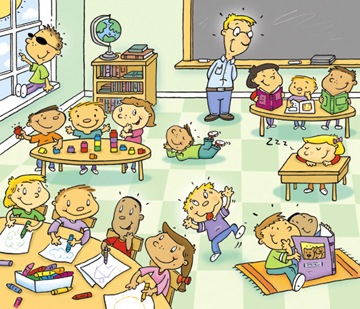
Emdin asserts that pre-service teachers must see urban youth of color as “neoindigenous” since these youth have shared experiences of being oppressed by a dominant group. Emdin builds his argument when he claims that unprepared “white folks” silence neoindigenous youth by denying their voices which “showcase[e] their culture in vivid, visceral, and transgressive ways” (p. 12) thus effectively rendering urban youth as invisible. His argument is that pre-service teachers or teachers who anticipate working in urban schools with youth of color must engage in “Culturally Relevant Pedagogy” to successfully engage students before begining the business of educating neoindigenous students because their reality is vastly different from typical students in traditional classrooms.
One of the most positive aspects Emdin outlines in these early chapters is the idea of creating a classroom culture where “educators … create safe and trusting environments that are respectful of students’ culture” (p. 27). Because my teacher education program understood the concept of reality and culturally relevant pedagogy, I was well-prepared to teach students of color – whatever color that happened to be. To this day, I do not begin my class without first gauging the temperature of my class. That is who are they, what matters to them, what are they interested in, and why should I care. Although my students were not all from challenging homes or disadvantaged environments, they all understood the concept of respect as a two-way process.

The example used in chapter 1 of the teacher who expected the student to be prepared was a vivid exemplar of how miscommunication occurs and how disrespect is viewed by students. When the student cried in the principal’s office because she did not or could not articulate her side of the story because she felt silenced was eye-opening. Had this teacher taken the time to respectfully speak to her student, the situation may not have escalated like it did. I am lucky to have a robust teacher toolbox when it comes to building relationships with my students.
I am looking forward to reading the rest of this book to enhance my already strong teacher toolbox.
References
Cartoon classroom image (n.d.). Retrieved from Bing Image Search. Found on https://debosmita.files.wordpress.com/2010/04/classroom.jpg Retrieved on June 21, 2019.
Crying eye girl sadness image (n.d). Retrieved from Bing Image Search. Found onhttp://s3.favim.com/orig/46/crying-eye-girl-sad-sadness-Favim.com-424109.jpg Retrieved on June 21, 2019.
Emdin, C. (2016). For white folks who teach in the hood…and the rest of y’all Too: Reality pedagogy and urban education. Boston: Beacon Press.
TED. (2014, April 8). Emdin, C. Teach teachers how to create magic TEDxTeachersCollege. [Video File]. Retrieved from https://www.youtube.com/watch?v=H3ddtbeduoo&feature=youtu.be.
 Educating Edis

