Defining literacy has become a challenge in recent years because our world has changed so much since the advent of technology. Once upon a time, being literate simply meant a person could read and write. Fast forward to 2019, and literacy has taken on a whole new identity. In 2019, not only does literacy mean being able to read and write, it also means being able to discern the emojis teenagers use to respond to texts.

The Dab Emoji is the most requested emoji as reported by EmojiRequest.com.
Today, being literate also means understanding the nuances in the memes posted on social media walls – was it supposed to be funny? Sarcastic? Amusing? Mean? And who’s is Felicia, anyway?
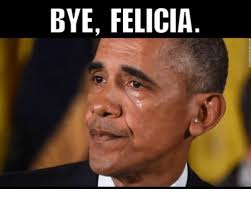
Even the President of the United States is not immune to being parodied in memes.
A pound key or pound symbol, which was also known as a number sign (#), now goes by the name hashtag – #latenightpottymouthwarning –
and without the ubiquitous @ symbol, email goes nowhere and no one can locate us on the “gram.” Does this qualify as literacy? In 2019, it absolutely does, as much as keeping track of Snapchat streaks counts as math.
Jesting aside, today’s definition of literacy is more than just knowing how to read and write. Literacy includes comprehension and understanding, critical thinking, and decoding. It’s not enough to know how to read, but also to practice that skill; likewise, it’s not enough to know how to write, but also to write for specific purposes, to and for specific audiences, and make some meaning in that writing – synthesize material, argue, persuade, inform, or call to action. Today’s literate community must still practice proper grammar and punctuation because language conventions are still appropriate and have not lost their prestige. I recently read The 57 Bus (2017) by Dashka Slater and realized that using preferred pronouns will be a new tool I must add to my literacy toolbox. Additionally, style and tone also play significant roles in our messages, and audience awareness is key to ensuring the right message gets to the right person/people. Given that we are also more visual in our literacy journeys, appropriate images can make or break our stories. A colleague recently mentioned The Book With No Pictures (2014) by BJ Novak which challenges young readers to employ a different kind of literacy, albeit age appropriate.
Our children must also be able to see themselves in the writings put before them. To be literate also means to connect with the words on the page on a personal level. This is the most important role our children’s and Young Adult literature has. Rich characters that resonate with readers create important connections; without these connections, literature can alienate readers – of all ages – the experience is lost no matter how great the story. My sophomore honors English students who read J.D. Salinger’s The Catcher in the Rye (1951) said they didn’t understand why it was still on the banned books list because the events and language in the novel were no longer taboo.
Our libraries and the literature they house must remain places where readers can find themselves, not just physically but also emotionally, socially, academically, and personally.
References
Fallon, J., & Timberlake, J. (2013). #Hashtag with Jimmy Fallon and Justin Timberlake (Late Night with Jimmy Fallon). Retrieved June 11, 2019, from https://www.youtube.com/watch?v=57dzaMaouXA
#Hashtag is a parody of the overuse of the tagline
Little Day Out. (2017). Seven fun facts about emojis in honour of world emoji day. Retrieved from https://www.littledayout.com/2017/07/15/seven-fun-facts-emojis-honour-world-emoji-day/. Retrieved June 12, 2019.
The Dab Emoji is the most requested and wanted emoji at emojirequest.com.
MEME. (n.d.) Barack Obama Bye, Felicia. meme. Retrieved from https://me.me/i/bye-felicia-7642007. Retrieved June 12, 2019.
Even the President of the United States is not immune to being posted in a Meme generator parody.
Novak, B.J. (2014). The book with no pictures. New York, NY: Dial Books for Young Readers.
Salinger, J.D. (1951). The catcher in the rye. Boston, MA: Little Brown and Company.
Slater, D. (2017). The 57 bus: A true story of two teenagers and the crime that changed their lives. New York, NY: Farrar, Straus and Giroux (BYR) – A Division of McMillian.
 Educating Edis